MASTER ZHOU TING JUE
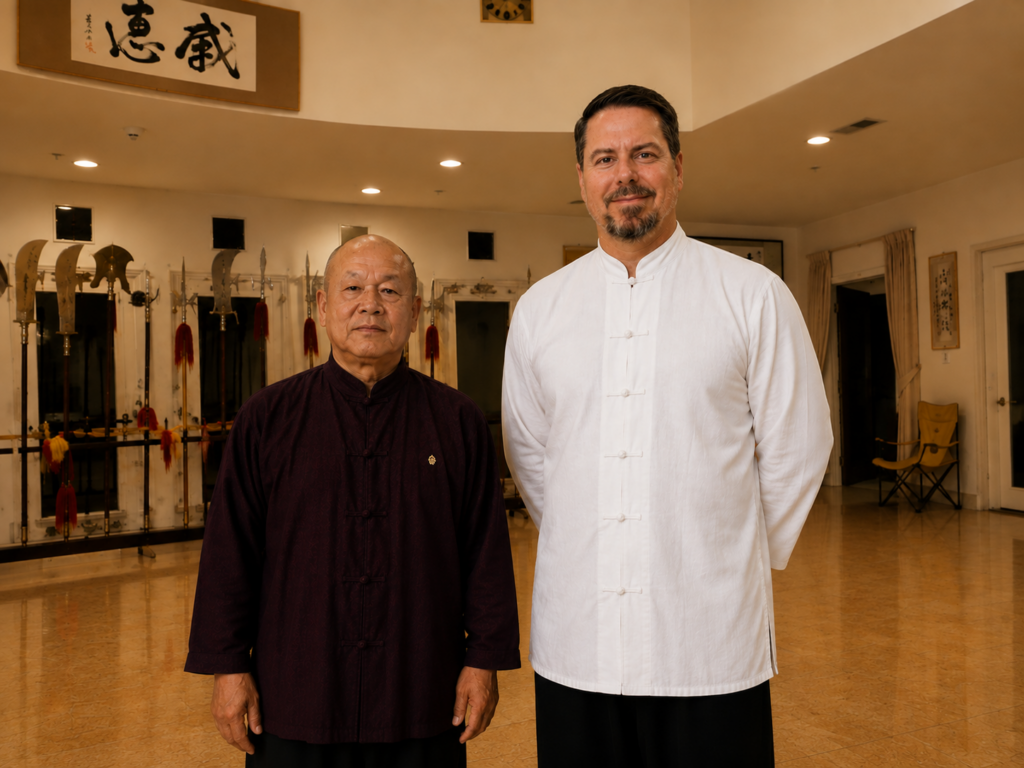
One of the significant influences in Smith’s development was Master Zhou Ting Jue, a Chinese qigong, tai chi, and kung fu practitioner who became widely known in the United States for public demonstrations of his abilities.
Smith received initiation and training in Master Zhou’s system of qigong, an experience that introduced him to a practitioner willing to place unusual internal skills on public display rather than confining them to stories and tradition.
Master Zhou attracted considerable media attention during his career, appearing in programs including Ripley’s Believe It or Not!, That’s Incredible! and Stan Lee’s Superhumans. A documentary titled The Master also explored his life and work.
Born in China in 1934, Zhou reportedly began martial and traditional Chinese medical training at an early age under the guidance of his uncle, a Taoist priest. His later training included periods associated with Wudang Mountain and the study of qigong, tai chi, kung fu, and traditional healing practices.
Drawing upon those experiences, Zhou developed his own approach known as “Heaven and Earth” Qigong.
For Smith, however, Zhou’s importance was not simply his reputation. He represented something much more consequential: an encounter with a practitioner whose training appeared to produce effects that could actually be experienced and observed. Sadly, Master Zhou passed away in 2023 at the age of 89.
Jerigtu Borjigin
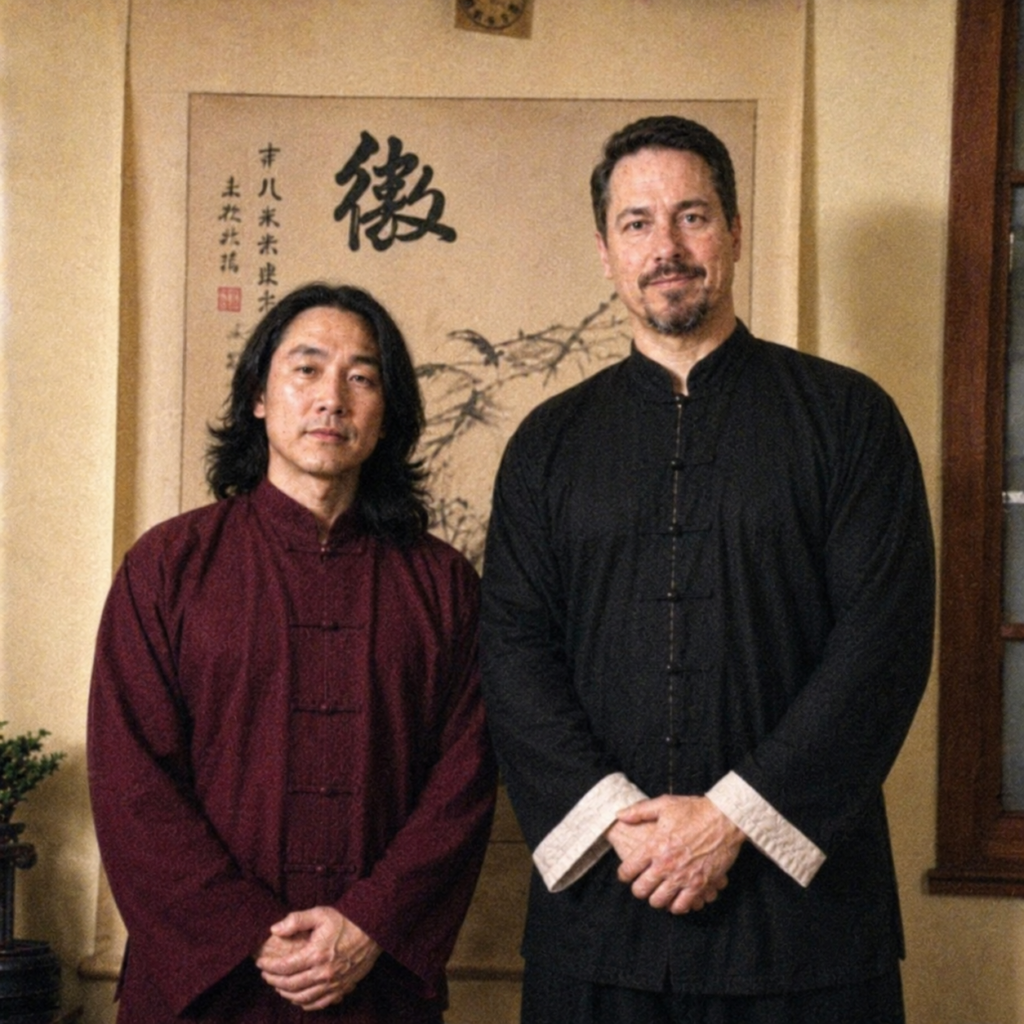
Nearly fifteen years ago, Smith’s search led him to Mongolian practitioner Jerigtu Borjigin.
Borjigin taught Smith a traditional form of Yijinjing, which Borjigin described as having been transmitted through his family and Tibetan Buddhist heritage in Mongolia.
Their relationship extended beyond a brief seminar or isolated encounter. Smith trained with Borjigin and received treatments from him over a period of several years.
That extended exposure became important to Smith’s developing philosophy. It provided enough time to judge the training not by the personality or reputation of the teacher, but by what happened through sustained practice.
Smith ultimately came to regard Borjigin as one of the authentic teachers encountered during his long investigation of internal training.
Borjigin no longer regularly travels to the United States and has more recently focused on offering opportunities to study in Mongolia.
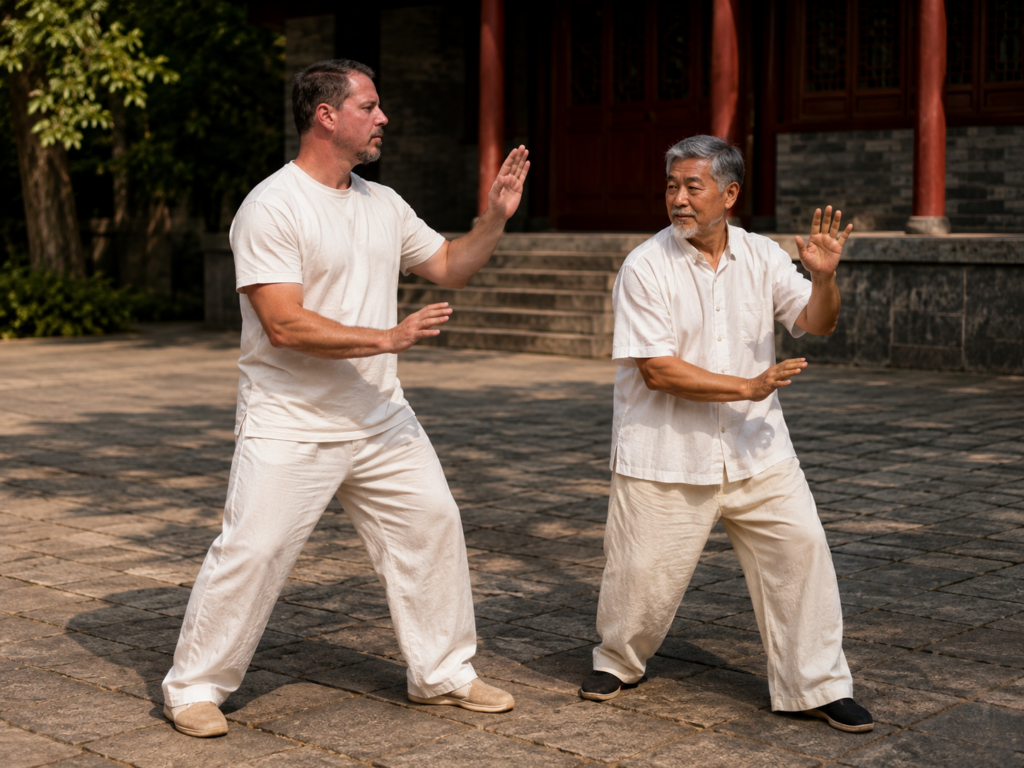
Tzun Tzun Hsue
Another important chapter came through training with Tzun Tzun Hsue, a teacher who lives in Portland, Oregon.
Hsue introduced Smith to an unusual Tibetan-influenced qigong practice that Smith found particularly potent.
According to the history Hsue shared with his students, his martial education began during childhood in Tibet and included demanding traditional methods that would be considered exceptionally severe by contemporary standards.
Central to the training Smith received from Hsue was Zhan Zhuang, or standing practice.
Rather than treating standing meditation merely as relaxation or static posture training, the method used prolonged standing as a foundation for developing internal qualities associated with what Hsue described as empty-force kung fu.
Once again, the significance for Smith was experiential. The practice produced sufficiently noticeable effects to distinguish itself from many of the systems encountered during the preceding years.
Hsue eventually withdrew from public teaching and now maintains a considerably more private life.